
 Naijacentral Naijacentral
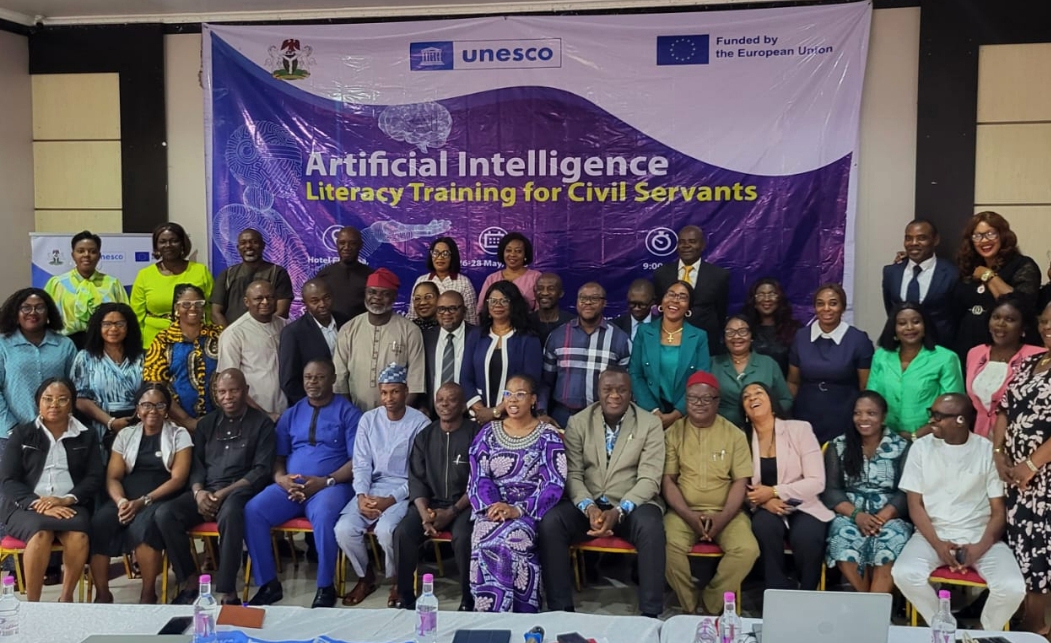
The Enugu State Government says it is pursuing a drastically improved productivity in the state civil service through the positive application of Artificial Intelligence (AI) in service delivery.
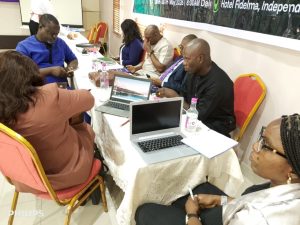
The Enugu State Head of Service, Dr Godwin Anigbo, said this on Tuesday while declaring open an Artificial Intelligence (AI) Literacy Training for Permanent Secretaries (PS) and Directors in the state.
The three-day Artificial Intelligence (AI) Literacy Training is being funded by the European Union (EU) in partnership with the Enugu State Government through the Office of the Head of Service.
Represented by the Permanent Secretary, General Administration in the Office of the Head of Service, Dr Ogbonna Idike, the head of service said that AI had revolutionised work processes in workplaces and industries.
He noted that AI had great impact especially on the economy, which ultimately is currently creating new opportunities for the overall growth and development of the society.
“As this continue to evolve, it is therefore important for us to understand not only the benefits of Al, but also the ethical responsibilities and challenges that come with it.
“So my dear colleagues and other participants, this training provides a valuable platform for learning, collaboration and meaningful discussions.
“This will provide you with the practical knowledge, ideas on how AI can be applied to solve real life problems and improve productivity in our working places and environment,” he said.
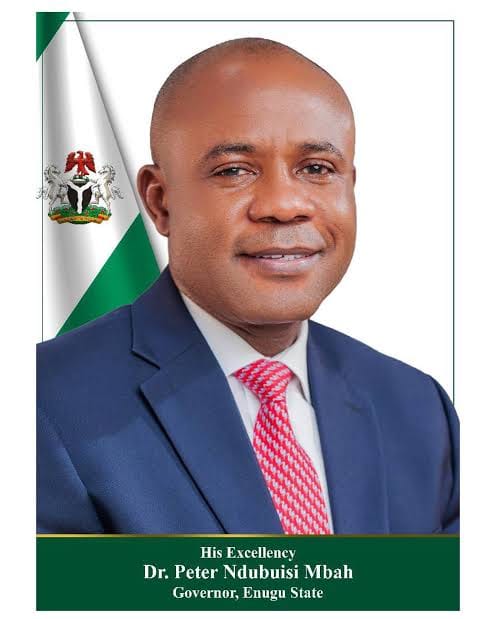
Anigbo commended the visionary leadership of Gov. Peter Mbah for moving the state civil service from analog to full pledged digitalisation of all work processes leading to increased productivity and efficiency in service delivery.
“His Excellency, Dr Peter Ndubuisi Mbah, has envisioned Enugu State having modern civil service system built on digitalisation and workforce being competent to use digital tools and AI to increase daily productivity and service delivery,” he said.
Speaking, Dr Dimitri Sanga, the Officer-in-Charge of UNESCO Office in Abuja and UNESCO representative in Nigeria, said that Nigeria AI national strategy emphasised broad-based collaboration, and an AI ecosystem grounded in local realities, ethical standards and human-centered designs.
Sanga noted that Nigeria’s approach to AI and Digital Economy commitment resonates with that of other 192 UNESCO Member States that came together in 2021 to adopt the first normative guidelines for responsible AI.
According to him, the guidelines highlight UNESCO’s role as the only United Nations agency with a mandate in the sciences, ensuring that global and regional adoption of AI advances development gains for all, without endangering humanity or violating human rights.
He said that the guidelines, known as UNESCO’s Recommendations on the Ethics of Artificial Intelligence, is built on the realisation that AI technologies offer immense benefits, greater efficiency, expanded access to information, job creation, and increased public revenues.
Sanga, who was represented by Dr Nneka Okafor, Coordinator of UNESCO Recommendations on the Ethics of AI in Nigeria, said: “AI also carries significant risks that must be acted upon.
“UNESCO has also committed significantly to ensuring that Nigeria as a member state aligns its AI development plans with best global practice.
“In 2024, UNESCO with support from EU, and under the leadership of the Honourable Minister of Communication, Innovation and Digital Economy, launched the AI Readiness Assessment Methodology (RAM) in Nigeria.”