
 Naijacentral Naijacentral
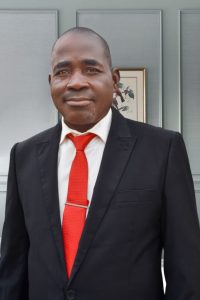
AN OBJECTIVE, NON-PASSIONATE ASSESSMENT (Part I) BY MATHIAS U. OZOR (POLITICAL ECONOMIST), DIRECTOR, POLITICAL EDUCATION UNIT, NATIONAL APC SUPPORTERS CENTRE, SOUTH EAST ZONE.
His Excellency, Bola Ahmed Tinubu, has served as President of Nigeria for the past three years. Perspectives about his administration differ sharply. A good number of Nigerians see him as a world citizen. He is also seen as a statesman in the mould of Nelson Mandela, former president of South Africa. He is also seen as a progressive performer, like former four-time U.S. President Franklin D. Roosevelt, the author of the New Deal. Again, he is seen as a nation builder, like another US President, Abraham Lincoln. Some said he is strong-willed like Joseph Stalin, former president of the defunct Union of Soviet Socialist Republics. Yet, some see him as an incurable optimist in scarcity in the mould of Lee Kuan Yew, the former eight time President of Singapore. Back home in Nigeria, Bola Ahmed Tinubu is known as a theorician and advocate of federalism and a democracy activist.His roles in championing the return of democracy during the dark days of military rule is well appreciated.
These segments believe that it is a worthy venture to support Bola Ahmed Tinubu to go for a second term in office.
However, some Nigerians hold different views about His administration and posturing that he does not deserve a second term.
With these prevailing conflicting views, it becomes imperative to examine the scorecard of Tinubu’s administration in the past three years, 2023 to 2026. This exercise is based on the premise that it is wrong to judge the performance of Bola Ahmed Tinubu administration (like all other elected or appointed public office holders) by relying on emotions or sentiments. Therefore, an assessment based on verification and fact-checks on the claimed programs, projects, policies, and activities of President Bola Ahmed Tinubu administration becomes ever compelling. In this assessment, we embarked on a thorough verification and rigorous assessment and interpretation of his policies, programs, and projects.
Below is the detail of our reports, but before presenting them, we examined the precedents of Bola Ahmed Tinubu decades before he became President of Nigeria in 2023.
Record of Service of Bola Ahmed Tinubu, 1990 – 2023.
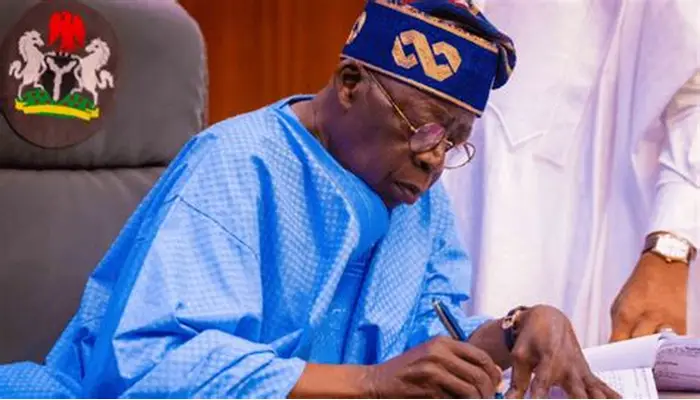
By 1990, Bola Ahmed Tinubu was a member of Social Democratic Party (SDP), one of the two political parties created by General Ibrahim Babangida. He got elected to the post of Senator representing Lagos South Senatorial District in the Nigerian Senate of the short-lived Third Republic. He was elected chairman, Senate Committee on appropriation until 17 Nov, 1993 when Sani Abacha overthrew the Government. He was the strategist and front-line Coordinator for the presidential election of late MkO Abiola alongside Dr. Jonathan Zwingina. MKO Abiola won the election, but his victory was annulled by military President General Ibrahim Babangida. The agitation for revalidation of the June 12 mandate followed. Bola Ahmed Tinubu was the arrowhead in league with other pro-democracy activists like Gani Fawehinmi, Chima Ubani, Beko Ramsom Kuti, Femi Falana, others.
With his financial war chest, he made valuable contributions in the struggle. The National Democratic Coalition was formed with radio Kudirat as the mouthpiece of the activities. When the military came after Tinubu, he chose the NADECO route for his safe exit and he went into exile where he continued his agitation for revalidation of June 12, 1993 election mandate. It is important to note that Bola Ahmed Tinubu was a rich, wealthy, and well-placed Nigerian at the time of June 12 struggle, yet he abandoned his comfort and went into the trenches to restore democracy. When democracy was returned in Nigeria in 1998/1999, the people of Lagos State spear headed by some eggs heads and his political soulmates who played active roles in June 12 1993 struggles by names Tunji Bello, Dele Aleke and Segun Babatope, beckoned on him to come and vie for governorship. He yielded to the clarion call and he was elected. He governed Lagos State for eight years, 1999 to 2007. It has been documented elsewhere that the story of Bola Ahmed Tinubu’s eight years in Lagos State was essentially an eventful period characterized by utilization of visionary leadership, use of the best and brightest talents as well as creative strategies to turn Lagos State into a viable entity capable of fulfilling its potentials.
Bola Ahmed Tinubu administration as governor of Lagos State at inception was confronted with a very low internal revenue which was at 600 million naira, while the state’s monthly civil service wage bill was 800 million naira. He took several measures to tackle the poor revenue challenge. The major radical measure was the introduction of the electronic banking system/revenue collection monitoring project which enabled the utilization of high-level technology to create the robust database. By the time his eight-year tenure was coming to an end in 2007, the revenue profile of Lagos State had tripled.
One remarkable feat of Tinubu’s administration in Lagos was his ability to withstand the hostile and partisan opposition which came from Olusegun Obasanjo, PDP-led federal government, which was determined and desperate to capture Lagos State. This sound financial standing of the state enabled it to survive the politically motivated seizure of over 24 billion naira (then) of the federal allocations due to the local governments in Lagos State for over two years.
In spite of the adversarial relationship from the federal government, His Excellency Bola Ahmed Tinubu administration was able to execute the following landmark legacy projects with private-public-partnership arrangements
1. The construction of the star project, Lekki-Epe Expressway, at the cost of N44 billion.
2. The construction of several projects in Victoria Island, which include the renewal, redevelopment, and reconstruction of the Lagos Island Central Business District, comprising 16 highways.
3. Reconstruction and modernization of such key roads like Awolowo Road, Oregun, Lasu-Iba Road, and Ajah-Badore roads, etc.
4. Upgrading facilities and buildings at Lagos State University Teaching Hospital.
5. Construction of modern Courts.
6. Expansion and rehabilitation of general hospitals in Lagos, Gbagada, Epe, Isolo, Ikorodu, etc.
7. massive rehabilitation and construction of new primary schools in all divisions of the state.
8. Expansion and reconstruction of new primary schools in the state.
9. Construction of housing estates such as Abraham Adesanya Housing Estate, Oba Adeyinka Oyekan Housing Scheme, Lekki Ikateja GRA Housing Scheme, Lekki II Millennium Housing Scheme, Ayangburam Housing Scheme, Ikorodu Gbagada Housing Scheme.
10. Massive ward electrification projects.
11. Micro water projects, ETC.
12. Global computerization of the public service.
In doing all these, Bola Ahmed Tinubu recruited the best brains from different ethnic backgrounds, including the Edo, Igbo, Egbira, Hausa, and others, and made them part of his government. At the end of his second term, Lagos State was widely adjudged as the poster child of dividend of democracy, with Bola Ahmed Tinubu as the shining light of the show. Lagos State was seen as the best governed and the best run state in Nigeria, with all the credit directed to one man, Bola Ahmed Tinubu.
The Legacy of President Bola Ahmed Tinubu Administration 2023 – 2026
In preparation to the party primaries of All Progressives Congress, APC, in 2022, many Nigerians wished that Bola Ahmed Tinubu emerge as the candidate to succeed President Muhammadu Buhari. Their wish was fueled by the desire for Tinubu to come and replicate his wonderful legacies in Lagos State at the federal level. The APC stakeholders craved for his emergence in the party primaries. In particular, the 13 APC governors of northern extraction took the project as their personal project, partly because they see in Bola Tinubu as someone who has the capacity to drive Nigeria to a higher level, and partly to show that they are people of conscience by appreciating Tinubu for his total support to one of their own, the outgoing President Muhammadu Buhari. It is on record that Bola Almed Tinubu gave his all to ensure victory for Muhammadu Buhari in 2015 election. In a lecture delivered on 14th July 2017 at Abara, Ogun State, to mark the 78 birthday of His Excellency Aremu Olusegun Osoba, Chief Wole Olanipekun said he might not know how much APC members from the southwest contributed financially to the election of president Muhammadu Buhari. He however said that through Asiwaju Bola Almed Tinubu, a formidable team of Yoruba lawyers under his ( Olanipekun) leadership was assembled to attend to tackle professionally all the pre election cases filed against the then candidate Muhammadu Buhari in different courts and jurisdictions in Nigeria. And prayers of Nigerians were answered as he went ahead to win the election.
With a pan -Nigerian mandate. Tinubu had a vision to treat all sections of Nigeria equally and fairly. Most importantly, he came with a mission to lift Nigeria’s economy to a higher level. According to the Minister of Budgets and Economic Planning, Senator Abubakar Bagudu, President Tinubu set a clear target of achieving $1 trillion economy by 2030. With this target in mind, he adopted several strategies which have all impacted positively on various sectors in Nigeria.
This assessment examined the various policies, programs, and projects introduced by the administration and determined the extent of their performance. Focus was on the following areas: a. Infrastructural facilities; legacy projects; economic reforms; social amenities and services; equity, balance, and spread of both infrastructure and appointments; and new initiatives in governance and development.
Infrastructural Projects
The Tinubu administration came up with the National Land Transport Policy as a foundational document that promises to harmonize and standardize the movement of people and goods across the country.
Adebajo Gloria Fraser, the president of National Patriots, observed that by all measurable economic standards, no serious nation has ever industrialized without first solving one of the critical problems: how to move goods, people, energy, and capital efficiently. She explained that that was the secret behind America’s rise, the foundation of China’s transportation, and central to Europe’s industrial revolution. She also pointed out that countries become prosperous because they build systems that allow commerce to move faster, cheaper, and farther.
In consonance with this reality, the Bola Ahmed Tinubu administration has committed trillions of naira to provide and construct federal roads, projects, nationwide alongside investments involving ports, rail, modernization, bridges and urban transport systems. The results of these investments have been verified in the transportation sub-sectors like roads, railways, seaports, etc. Some examples are given below.
The four legacy road projects.
The Tinubu administration embarked on an ambitious four legacy road projects nationwide, namely:
1. the 1068-kilometer Badagry-Illela-Sokoto Superhighway.
2. The 750 Kilometer Lagos-Port Harcourt-Calabar Coastal Highway.
3. The 477 -kilometer Trans-Sahara Highway traversing Ebonyi, Kogi, Benue, Nasarawa, FCT States.
4. The 422-kilometer Akwanga-Jos-Bauchi-Gombe-Maiduguri Expressway.
The Honorable Minister of Works, Senator Engineer Dave Umahi, while receiving a delegation from the ECOWAS Bank for Investment and Developments on June 8, 2026, described the four legacy route projects as transformative national infrastructure networks that will connect all six geopolitical zones of Nigeria, unlock economic opportunities, boost food security, and accelerate regional integration. Gloria Fraser explained that Lagos-Calabar Coastal Highway alone represents one of the most ambitious road projects in contemporary African history. She further explained that the Sokoto-Badagry Superhighway is another strategic undertaking with implications far beyond transportation. She pointed out that by linking parts of the north to the southwest, the project aims to reduce freight networks, strengthen agricultural supply chains, and improve interregional commerce.
Other road projects.
There are, however, other road projects ongoing in the country which have received boost through more funding by Bola Ahmed Tinubu administration. These road projects, as identified by the Ministry of Information and National Orientation, include
South South Region.
5. Eleme Onne road (30 km)
6. Eket Bypass, (9.7 km.)
7. East-West Road Section 2.
8. Nembe- Brass road.
9. Lokoja binin dualization.
10. Second Niger Bridge, access road to Delta, State.
11. Bodo-Bonny Road.
South West Region
12. Lagos-Ibadan Superhighway
13. Lagos Sagamu dualization
14. Oyo-Ogbomoso- ilorin.
15. Rehabilitation of Carter, Third Mainland and Eko bridges.
Southeast Region.
16. Enugu-Onitsha Road completion of dualisation
17. Enugu- Abakiliki road.
18. Second Niger Bridge Access road dualised.
19. Lokpanta – Enugu Road.
20. Benue Ninth Mile road dualized.
North West, North East, and North Central.
21. Sokoto, Gusau, Funtan, Zaria Road (275km)
22. Abuja-Kaduna-Kano road dualized, (764km).
23. Zaria-Hunkuyi Road, 156 km.
24. Kano Northern Bypass, 49 km.
25. Kano-Maiduguri Road, 100.9 km.
26. Jigawa, Kastina, Kano Road, Dualized 256km.
27. Bama-Dikwa road in Borno, 100 km.
28. Damaturu-Maiduguri Road, 110 km.
29. Malando in Kebbi, 76KM.
30. Benue Markudi, Ninth mile Road, dualized.
31. Lokoja-Okene Road dualized 86 km.
32. Kaduna, Katsina Road section I & II
Newly Approved Road Projects. On June 24, 2026, Tinubu administration approved the contract for the construction of the following road projects. While the naysayers may go to town to say it is not proper to add the newly approved road projects as most of them are just at the foundation level, one can be comfortable adding them given that Bola Almed Tinubu has no history of abandoning any development project he initiated right from his days as governor of Lagos State between 1999 to 2007. The same discipline in project management has continued in his tenure as President of Nigeria from 2023. So one can take it to the bank that the Tinubu administration will complete all the new road projects approved on June 24, 2026 even on record time. Those newly approved 27 road projects worth over₦3.9 trillion across 15 states include: 1. 409 km dual carriageway in Niger State 2. Dualisation of llorin- Ogbomosho road. 3. Reconstruction of lseyin- Eruwa- Agbesi- road in Oyo and Kwara states. 4. Dualisation of old Alignment ljaye to FGC to Ilorin road with a spur to Akinmorin. 5. Abakaliki – Afikpo road in Ebonyi State. 6. Ogbomosho – Oko- lllupu road in Oyo and Osun States. 7. Rehabilitation of the sections 1 and 2 of the llorin- Omorin- Ebe- Kabba- Obajana road in Kwara and Kogi states. 8. Construction of ldi- Araba- Ayede- Olodo road in Oyo State. 9. Rehabilitation of Baban- Lamba- Sharan phase road in plateau State. 10. Reconstruction of Enugu- Abakaliki road with flyover. 11. Odikpo- Ajayi- Tese- Akpa- Oturkpo road in Benue and Cross River states. 12. Jimeta- mayo- Balewa road in Adamawa state. 13. Rehabilitation of lgbeti road in Oyo State. 14. Construction of lgbeti- Soro- Kishi road in Oyo State. 15. Construction of Dabban- Makina road in Niger State. 16. Tungo-Karamti road with five bridges between Adamawa and Taraba states. 17. Rehabilitation of Yola- Hong- Mubi road phase 2 in Adamawa state. 18. Amasiri- Okporojo road. 19. Ikere- Ekiti- ljare road in Ekiti State. 20. New flyover on the ongoing Trans- Sahara road. 21. Rehabilitation of Kabba- lfaki- Ado Ekiti road in Kogi to Ekiti State 22. Flyover bridge at Oke- Olowo junction in Kwara State. 23. Construction of Pacific road linking lgbe Laara to lkorodu in Lagos State. 24. Badeku- Jaiye road in Oyo State. 25. Phase 2 of the Yola-Fufore- Gurin road project in Adamawa state 26. Augmentation road project in Gashua, Yobe state. 27. Full business case for the Lagos- lbadan Expressway and the directive to commence reconstruction of the failed sections of the lbadan axis using concrete.
Railway Transport System.
The railway transport system under the new administration gives priority to modernizing and expanding Nigeria’s railway network to manage the future population demands and connect major economic corridors. The railway subsector is another critical component of Nigeria’s economic infrastructure where the Tinubu administration has demonstrated vision, exceptional performance, and laid a groundbreaking foundation for a more robust future economy.
On 16 October 2020, the Federal Government under former President Muhammadu Buhari awarded a contract to the China Civil Engineering Construction Corporation (CCECC) for the redevelopment, rehabilitation, and reconstruction of the Port Harcourt–Maiduguri Eastern Railway Corridor. The project covered approximately 1,443 kilometres (897 miles), including new branch lines to Owerri, Port Harcourt, Onne, Bonny, and Damaturu, as well as transshipment facilities. The contract was valued at approximately US$3.02 billion.
The scope of the project includes the rehabilitation of the existing heavy steel narrow-gauge railway lines, the construction of new modern railway stations, and the procurement of modern rolling stock. As the existing railway system is based on narrow gauge, the modernization programme also incorporates track rehabilitation, installation of new signaling systems, and the introduction of improved rolling stock to enhance speed, capacity, operational efficiency, and safety. Furthermore, the project aligns with the Federal Government’s long-term vision of gradually transitioning to standard-gauge operations, ensuring compatibility with newer railway corridors such as the Lagos–Ibadan and Abuja–Kaduna rail lines.
According to the contractual agreement, the Federal Government is responsible for providing 15 percent of the direct construction cost, including land acquisition and Value Added Tax (VAT), while 85 percent of the project cost is expected to be financed through external bank loans.
The project was scheduled for completion within 36 months. Although the contract commencement ceremony was held on 10 March 2021, inadequate funding, as well as several technical and contractual challenges, delayed the actual commencement of construction until March 2022.
Upon assuming office in 2023, the administration of President Bola Ahmed Tinubu identified the project as a transformative national infrastructure initiative and reaffirmed its commitment to ensuring its completion despite its substantial dollar cost. The administration considers the railway corridor a strategic national asset because, when completed, it will connect 14 states across Nigeria’s Eastern Corridor, including Rivers, Abia, Imo, Enugu, Ebonyi, Anambra, Benue, Nasarawa, Plateau, Kaduna, Bauchi, Gombe, Yobe, and Borno States. This extensive rail network is expected to significantly improve regional connectivity, facilitate trade, reduce transportation costs, stimulate economic growth, and promote national integration.
The railway corridor traverses the states of Rivers, Abia, Imo, Ebonyi, Enugu, Benue, Nasarawa, Plateau, Bauchi, Gombe, Yobe, and Borno. The project has been widely acclaimed as a true legacy initiative of national significance.
The rehabilitated rail line is expected to strengthen Nigeria’s industrial and agricultural value chains by facilitating the efficient movement of people, goods, and services across the country. By restoring this critical transport corridor, the government aims to reconnect inland production centres with the Port Harcourt seaport, thereby reducing haulage costs, easing pressure on the nation’s roads, and boosting exports.
The railway will also enhance the movement of freight and passengers, particularly bulk commodities such as cement, steel, agricultural produce, and petroleum products, all of which are vital to regional commerce and national economic growth.
Overall, the project represents a highly ambitious and strategic investment in economic revitalization, regional balance, and national integration. Infrastructure projects of this magnitude are expected to generate significant benefits across multiple sectors of the Nigerian economy The Tinubu administration also approved one trillion naira for construction of the Kano light rails.
The metro line projects in Lagos and Ogun States form part of the government’s efforts to develop Nigeria’s light rail infrastructure.
Kano-Maradi railline equally received funding under Tinubu administration.
Seaport and maritime transport
The Tinubu administration has also done well in maritime transport. In addition to the approval of the $1 billion for the reconstruction of the existing five seaports, Apapa Port, Tincan Island Port, Calabar Port, Warri Port, Port Harcourt Port, the Bola Ahmed Tinubu administration also approved the construction of five new deep seaport, namely Badagry Seaport in Lagos State, Olokola Deep seaport in Ondo State, Bakassi seaport in Cross River State, Ibom Deep Seaport in Akwa Ibom State, and Bonny Deep Seaport in Rivers State. The need for the new deep seaports emanated from the surging ultra large vessels and supertankers which can be better handled at such deep sea ports and tame the diversion of ships destined for Nigeria to other neighboring African countries.
As can be observed, the infrastructure projects of the Bola Ahmed Tinubu administration were fairly distributed to all parts of Nigeria Federation, cutting across the six geopolitical zones of the country. There is evidence of proportional distribution of roads, railway, and ports to all parts of the country.
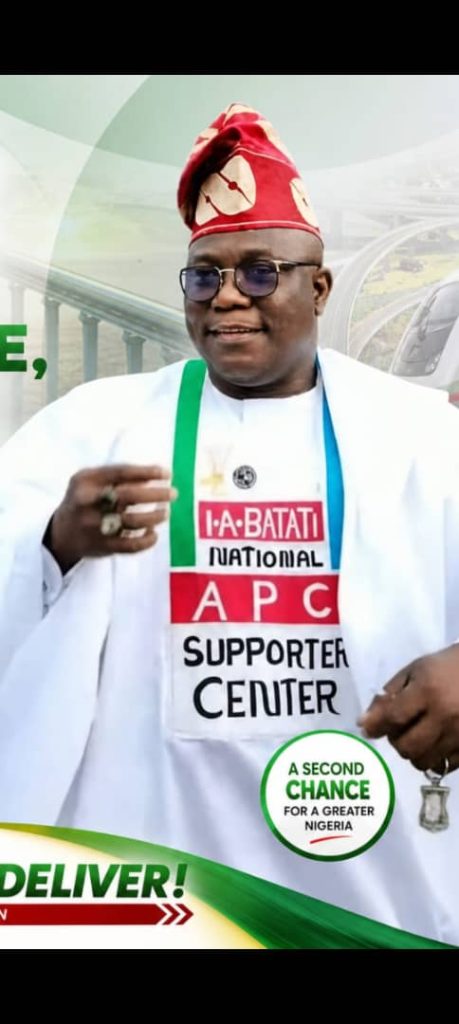
National Coordinator,
National APC Supporters Center.
Electricity Act 2023.
President Bola Ahmed Tinubu signed the Electricity Act 2023 to officially unbundle and decentralize electricity sector.
On June 5th, 2023, President Tinubu assented to the Electricity Bill which authorizes states, companies, and individuals to generate, transmit, and distribute electricity.
The new electricity law repeals the Electric Power Sector Reform Act, which was signed by President Olusegun Obasanjo in 2005. The idea is to encourage the private sector investment in the industry. It provides a framework for the improvement of access to electricity in rural, unserved, underserved, pre-urban, and urban areas through the use of conventional sources and renewable energy, off-grid, and mini-grid solutions.
With the new law, states would be able to issue licenses to private investors who have the ability to operate mini-grids and power plants, but such licenses are not to extend to interstate or transnational distribution of electricity. The constitutional amendment permits Nigeria’s 36 states to generate electricity.
Conclusion
From the survey we conducted and presented above, it is very clear that President Bola Ahmed Tinubu administration has performed credibly well within three years, 2023 to 2026 in providing and building economic infrastructures . It is therefore proper for Nigerians to support him and vote him for a second term into office. He deserves to be allowed to serve for another term, given that his project, especially the legacy projects, stand to serve as basic infrastructure to drive the development of the economy even many years after his tenure. Anybody who dispassionately and objectively examines the impact of infrastructure in an economy will believe that President Bola Ahmed Tinubu has done well for Nigerians and the future generations. Writing on a title Tinubu: the Power of aforiti in the Nation news paper, May 23, 2023, Louis Odion observed that Tinubu was the man many young Nigerians (the millenals and Gen Z) do not seem to know or have been misled to hate and deny credits as arguably the biggest champion of multiparty democracy in the fourth Republic. Till date, this perception, this stereotype, still persists. It is instructive to note that most of those attacking Bola Ahmed Tinubu and misleading the younger ones do not want to know his records of services and landmark projects and programmes. In fact, they are not interested whether he has performed as Nigeria’s President or not. All they are interested in is to remove him now or latest by 2027 election. It becomes very necessary to educate Nigerians especially the young ones. They need to, without sentiment, emotion or bias, objectively examine the developmental projects, programmes and policies of Tinubu administration so that they can be better informed before taking decision on which side of the political divide to join as 2027 approaches.
Powered by Dr. Alhaji Abubakar Ibrahim Batati
National Coordinator,
National APC Supporters Center.