
 Naijacentral Naijacentral
The Innoson Vehicle Manufacturing (IVM) has called for stronger government policies, regional market protection and sustained investment in human capital development as critical drivers of Africa’s automotive industry and long-term industrial growth.
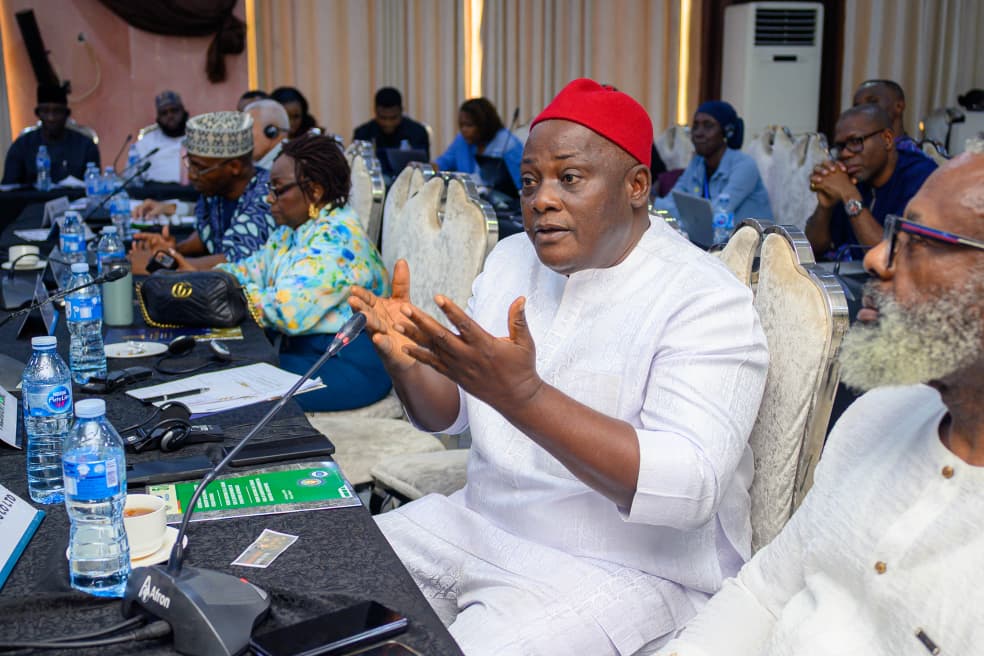
The Chairman of IVM, Chief Innocent Chukwuma, made the call during the ECOWAS Regional Automotive Industry Development Forum held in Abuja from August 4 to 6, 2026.
The forum brought together policymakers, development partners, manufacturers and industry stakeholders to advance the implementation of the ECOWAS Automotive Industry Policy Framework.
The meeting focused on practical strategies to attract investment, strengthen regional value chains and position West Africa as a globally competitive automotive manufacturing hub.
Speaking during a high-level panel on policy reforms needed to unlock investor commitment to ECOWAS automotive manufacturing and assembly operations, Chukwuma stressed that Africa already possesses the entrepreneurial capacity and technical expertise to manufacture vehicles locally.
However, he argued that the sector’s growth depends on deliberate government policies that prioritise and protect locally manufactured vehicles.
Drawing comparisons with countries such as India, he said successful industrial economies had built strong automotive industries through consistent procurement policies, local content requirements and long-term industrial planning.
He urged African governments to adopt similar measures by giving preference to vehicles manufactured within the continent for government procurement and public institutions.
“Through continued investment in manufacturing, innovation, technology and skills development, IVM is building vehicles for Africa, by Africans, while contributing meaningfully to the continent’s industrial transformation and economic prosperity,” he said.
According to him, increased patronage of locally produced vehicles would stimulate demand, encourage global automotive manufacturers to establish production facilities in Africa, promote technology transfer and strengthen the continent’s industrial base.
Chukwuma also highlighted Innoson’s evolution from manufacturing vehicle components to producing complete vehicles, noting that indigenous innovation and technical expertise already exist across Africa.
He disclosed that the company was pursuing collaborations to develop electric vehicles by combining African manufacturing capacity with international technological expertise.
On the issue of used vehicle imports, the IVM chairman advocated regional policies to restrict the importation of ageing vehicles into ECOWAS member states.
He said such measures would create greater demand for locally manufactured vehicles, generate employment, strengthen local industries and reduce dependence on imports.
He further emphasised that policy consistency remained vital for attracting long-term investment, noting that investors require confidence in stable industrial policies before committing significant resources.
Representing Innoson Kiara Academy (IKA), its Chief Executive Officer, Mr Ndubuisi Ezengwa, said human capital development should be recognised as a key pillar of the ECOWAS automotive transformation agenda alongside policy reforms and investment incentives.
Ezengwa noted that the successful implementation of the ECOWAS Automotive Industry Policy Framework would depend on the availability of a skilled workforce capable of supporting advanced manufacturing, localisation, electric vehicle technologies, automation and Industry 4.0.
He proposed the establishment of a Regional Automotive Skills Development Framework to support competency-based training, apprenticeship programmes, instructor development, technology transfer and industry-led curriculum development.
He also advocated harmonised occupational standards and mutual recognition of automotive qualifications across ECOWAS member states to facilitate workforce mobility.