
 Naijacentral Naijacentral
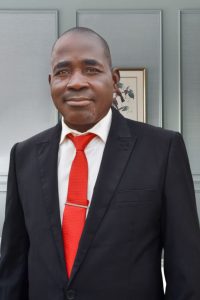
By Matthias U. Ozor (Political Economist) Director, Political Education Unit, National APC Supporters Centre, South East Zone, July 2026.
Felix Akinnibi (2023) notes that the concept of fuel subsidy has been a topic of significant discussion and debate in Nigeria especially since 29th may 2023 when president Bola Tinubu in his inaugural speech said that “fuel subsidy is gone”. Conversations on the issue is not limited to elites, academia, or even economists. Everyone is Interested and everyone participates.
Blames are being heaped on President Bola Ahmed Tinubu as the person who has imposed hardship on Nigerians due to the removal of fuel subsidy. As the 2027 election approaches, the opposition parties are amplifying the condemnation of the Tinubu administration and mobilizing Nigerian voters against Tinubu and APC.
Through interviews, personal observation, and content analysis of discussions on the issue, our unit, Political Education Unit, discovered that most of the people engaging in conversations on the fuel subsidy removal do not have any idea what fuel subsidy is all about. The result of our elaborate research on the issue is here below presented to Nigerians and the candid world
All we need to know about fuel subsidy removal in Nigeria.
What is the meaning of the concept of subsidy?
Subsidy can be defined as any measure that keeps prices for a good or product below market level for consumers or producers. Subsidies can take different forms like grants, tax, tax reduction, or exemption, and price control. Subsidy is paid by government or an organization to reduce the cost of service or that of producing goods so that their prices can be kept low. So subsidy can be seen as any government intervention in cash or in kind to a private sector, producers or consumers for which government receives no significant compensation in return.
What is fuel subsidy?
Felix Akinnibi defines fuel subsidy as financial assistance provided by the government to reduce the cost of fuel for consumers. He notes that this is done to keep the fuel prices lower and make it more affordable for the general population. He points out that the government absorbs a portion of the cost of fuel to maintain affordability for everyone. Chinedu Onyeizugbe and Ebele Mary Onwuka (2012) note that fuel subsidy is part of deregulation of the downstream sector of the petroleum sector. They opine that the subsidy on fuel is that portion of amount consumers are to pay which the government pay to relieve the burden of the price. Neil MC. Culloch, Tom Moerenhout and Joon Suek Yang (2020) observe that subsidies exist because the government fixes the price and uses the government’s resources to pay for the difference.
Historical origin of fuel subsidy policy in Nigeria.
PwC 2023 documents that the Nigerian economy has been subsidized in various ways for many years, and this includes subsidy on fuel, education, electricity, foreign exchange, etc. The International Energy Agency said that in Nigeria, fuel subsidies were first introduced in 1973 as a response to the oil price shock due to the Yom Kippur War (The war between Israel and her neighboring Arab countries.) It was also noted that the fuel subsidy became institutionalized in 1977 following the promulgation of the Price Control Act, which made it illegal for some products,
(including petrol) to be sold above the regulated price. Martin A Awi (2012) explains that for 40 years (in 2012) Nigerians have been paying almost half of the global market price for petrol. Martin explains that the subsidization of fuel in order to lessen the burden on the people has been a popular policy among major oil producers and socialist or communist countries such as China, Cuba, Egypt, Iran, Libya, Syria, Venezuela, and Yemen.
Emmanuel stobber avers that fuel subsidy over the years has been a growing liability to Nigeria’s budget in a systematic fashion for almost five decades, hence the call for economic reform and fuel subsidy removal.
History of efforts to remove fuel subsidy in Nigeria
The efforts to remove fuel subsidy in Nigeria started in 1983. The Alhaji Shehu Shagari administration wanted to address the bad economic situation. The IMF, gave the administration a list of conditionalities before her loan request could be honoured, but the administration rejected three of the conditionalities, namely, removal of petrol subsidies, trade liberalization and privatization and devaluation of the naira currency.
A petroleum economist and President of Nigerian Association for Energy Economics, Prof. Wumi Ilodor, condemned the decision of the federal government to continue regulating the price of the petroleum sector. He added that the government has over the years made the same mistake repeatedly. He argued that the fuel subsidy regime was unprofitable and should be eliminated totally.
Implementation of fuel subsidy policy.
A policy can be good, but its implementation can mess up the program. PWC (2023) raised concerns that while the concept of fuel subsidy is noble, its administration in Nigeria has been plagued with serious allegations of corruption and mismanagement. To appreciate this situation better, we did a comparison of how fuel subsidy is administered in other countries and what’s obtained in Nigeria.
1 Fuel subsidy administration in France.
It was widely reported that the Prime Minister of France, Sebastian Le Cornu, at a press conference, unveiled a new subsidy package aimed at helping households and key industries cope with rising fuel prices. With the measure it was expected to cost around 710 million euros (770 million US dollars.(France 24; 2026. Politico Europe 2026; Xihuanet Republique Francais may 2026).
In a more plain language, Republic Francaise reported that an allowance of 100 euro is introduced for big roller workers to limit the effect of the increase in fuel prices. He said the aid is intended for workers who use their vehicles in particular, to get to their workplace under the fuel subsidy policy. About three million French people were able to benefit from the fuel allowance. The assistance is being provided to mitigate the effect of rising fuel costs.
Eligibility Criteria
The conditions stated for eligibility to benefit from the fuel subsidy allowance include:
A, one must live in France.
B, one must have been domiciled for tax purposes in France for 2024.
C, One must be born before 1st January 2009.
D. One must also use a personal vehicle for business purposes and be considered a big wheeler. To qualify for this category, the person must: I. Travel a distance of at least 15 kilometers per journey from home to work (30 kilometers round trip). II. Or travel at least 800 kilometers per year as part of his or her professional activity. This distance must include commuting.
E. And the resource requirements for receiving full allowance, one must belong to a household whose reference tax income per unit for 2024 was equal to or less than 16,880 euros, which must be indicated in the first page of one’s tax notice on the 2024 Revenues established in 2024.
F, Again, the income reported must fall into the following categories, namely:
i, salaries, wages, and similar incomes;
ii, industrial and commercial benefits;
iii, non-commercial profits;
iv, agricultural profits.
G, Moreover, one is not eligible for the fuel allowance if he or she is liable for real estate wealth tax for 2024.
Emphasizing the focus of the fuel subsidy program in France, the French Minister of the Economy and Finance, Roland Lescure, said:
“We have built a response at the national level which is gradual targeted, sector-specific and limited for the month of April.
2. The fuel subsidy administration in Saudi Arabia.
Saudi Arabia, an oil economy of the Arab regime implements fuel subsidy. J.D Lee (2025) notes that Saudi Arabia introduced fuel subsidy, which is a direct transfer system designed to protect low- and middle-income Saudi families from the financial impacts of economic reforms, such as reduction of fuel and energy subsidies. Lee observes that Saudi Arabia introduced what they call a unique social identifiers that aim to guarantee that assistance is allocated to the vulnerable.
Eligibility criteria for fuel subsidy.
The following are the criteria for eligibility for anybody to benefit from the Citizens Accounts Programme.
a, Nationalist requirement – The applicants must be a Saudi citizen with exceptions for holders of Saudi nationality cards, like Saudi mothers married to non-Saudis, permanent residents.
b, Residency Requirement – Applicants must be residing in Saudi Arabia permanently. Applicants who spend more than 90 consecutive days outside the kingdom within a year may lose eligibility.
c, Age Requirement – The main applicant must be at least 18 years old. Dependents can be added to if they are below this age.
d, Income Requirement – The amount of support is based on the total household income. Higher-income households may receive
reduced support or may be deemed ineligible.
e, Household Composition – Eligibility also depends on the number of dependents, spouse, children, or other supported family members. Larger households may receive higher support due to greater living expenses.
f, Documentation and accuracy – Applicants must provide accurate income details and other required information. Any discrepancy can result in the reduction or suspension of the benefits.
The guidelines and rules put in place in France and Saudi Arabia are foul-proof and not easy to manipulate.
3. Fuel subsidy administration in Nigeria.
The implementation of fuel subsidy in Nigeria is not structured, is not limited, is open, is generalized. It is not meant for any social or economic group. It is meant for everybody seen in Nigeria. No registration is required for anybody to enjoy fuel subsidy in Nigeria. In fact, nobody takes record of those enjoying the fuel subsidy. It is for everybody, rich and poor, citizen or foreign.
Such an implementation strategy is suscsesible to abuse and corruption. All these loopholes played out in the course of 50 years of the implementation of fuel subsidy in Nigeria. The International Energy Agency says that high fossil prices hit the poor hardest, but subsidies are rarely well targeted to protect the poor, vulnerable groups, and tend to benefit better off segments of the population. PWC observes that while the concept of subsidy itself is noble, its administration in Nigeria has been plagued with serious allegations of corruption and mismanagement.
Reign of Fuel Subsidy Abuse, Fraud and Corruption.
President Goodluck Jonathan informed Nigerians of his administration’s inability to continue to pump endless amount of money into the bottomless pit that was referred to as petroleum products subsidy. The administration explained that annual Subsidy payments was huge, endless, and that the colossal payments made were consumed by Nigerians (Vanguard, April 20,
2012). However, a large number of Nigerians disagreed with the government and maintained that unbridled corruption and inefficient and wasteful process accounts for the large part of the subsidy payments. On January 1st, 2012, the federal government announced the removal of fuel subside. Occupy Nigeria protests erupted spontaneously all over Nigeria as an official response, different government agencies set up panels of inquiry.
Startling Revelations
The House of Representatives set up an ad hoc committee to verify and determine the actual subsidy requirements and monitor the implementation of the subsidy policy in Nigeria. The committee was headed by Farouk Lawan. The reports of findings, among others, were,
1 The subsidy regime as operated between the period under review (2009 – 2011) were fraught with endemic corruption and entrenched inefficiency.
2 Some of the marketers were involved in claiming subsidy on products not supplied. The PPPRA allocated volumes of products each quarter to the marketers it knew were not eligible for such transaction.
3 That certain marketers collected subsidy of over 230.184 billion naira in PMS volume of 3,262,960,225 liters that from the records made available to us were not supplied.
4 That the particular Accountant General that served during the period 2009 was found to have made payments of equal instalments of 999 billion naira for a record of 128 times within 24 hours on January 12 and 13, 2009 Totaling 127.872 billion naira, that they discovered that only 36 marketers were participants under the Petroleum Support Fund (PSF). during this period. The committee argued that even if there were 128 marketers, it was inconceivable that all of them would have imported the same quantity of products to warrant equal payments.
Under the crisis, the Nigerian Senate set up a committee chaired by Senator Magnus Abe and mandated to investigate the management of fuel subsidy. In the course of their public hearings, it was revealed that hundred companies, including construction companies, participated in the sharing of 1,426 trillion between January and August 2011.
The Ministry of Finance set up a technical committee to look into the accusations of financial fraud in the fuel subsidy program. Mr Imoukhuede, Chairman Access Bank, was made the chairman.
The Federal Government later set up a committee on verification
and reconciliation of fuel subsidy payments with still Mr Imoukhuede as the Chairman (Vanguard July 25, 2012). The committee at the end of its work gave a total of 22 recommendations. Their last recommendation said that the lasting and final solution to ensure that the kind of thing does not occur again is for the deregulation of fuel subsidy. Meanwhile, several companies and some directors of various fuel importing companies were charged to court (Vanguard July 25th, 2012) by EFCC.
A Lagos High Court, sitting in Ikeja sentenced Adaoha Ugo-Ngadi and Mr Walter Wagbatson to 69 years imprisonment each and ordered their company, Ontario Oil and Gas Nigeria ltd, to refund over 754 billion naira to the Federal Government in her judgement, the judge said ” the convicts defrauded the Federal Government of 754 billion baira in oil subsidy transactions ( Daily sun, Jan 27, 2017).
In a twist of fate or an irony, the chairman of the House of Representatives, Ad hoc committee on fuel subsidy probe, Farouk Lawan and the former secretary of Fuel Subsidy Probe Committee, Mr. Boniface Emenalo, were accused of obtaining the sum of $500,000 from Femi Otedola, chairman, Zenon Petroleum and Gas Limited, as an inducement to remove the name of his company from the report of the House Committee on Monitoring of Fuel Subsidy Regime. Mr. Boniface Emenalo, Assistant Director and Secretary of the House of Representatives Committee on Monitoring of Fuel Subsidy, was accused of having, sometimes in April 2012, corruptly asked for the sum of $3 million from Mr Femi Otedola. While Farouk Lawan panel released its report detailing the various companies involved in the subsidy regime to prove his case, Femi Otedola, in an effort to tell Nigerians how the committee came up with the list of companies found in the committee report, released an audio tape with a view to prove that the probe panel members demanded cash for clearance/ exoneration of his company.
Ugoji Egbujo (in Vanguard 29,2015) noted that in 2011, the country had just five fuel importers plus NNPC under the scheme but by the end of 2011, the Petroleum Products Pricing Regulatory Agency had a list of 140 companies who had been given import allocations and who had collected subsidy payments.
While the allocations were given by the PPPRA, the Ministry of Petroleum Resources practically wrote the list. Prominent politicians and government officials became middlemen and hawkers of fuel subsidy allocations.
Egbujo noted that many bank officials worked hand in hand with the fuel marketers in the criminal enterprise, as some even helped marketers doctor their account statements when investigations started.
Egbujo narrated further that some rogue marketers sent in counterfeit documents and approvals to support applications for fuel subsidy for cargos they did not import.
Egbujo recommended that the way forward is that fuel subsidy must be scrapped immediately.
As if to confirm the fuel subsidy scam, the executive secretary of the PPPRA, Reginald Stanley, told the Senate Committee Chairman on Petroleum Resources Downstream, Senator Magnus Abe, that the federal government has slashed down the number of oil importers into the country from 128 to 38 as at December 2012. He also told the Senate that federal government has spent 3.7 trillion naira in five years. Reginald Stanley noted further that local consumption of fuel has been brought down from 60.25 million litres per day in 2011 to 40 million litres per day in 2012.
Following the outrageous revelations by various panels of inquiries, Nigerians came to know the activities of some oil importing marketers and the government agencies put in charge to regulate them. It was seen as a scam against Nigerians. The Buhari administration announced that it would gradually remove fuel subsidies over the course of 2016. After some engagement with stakeholders, the National Planning, Finance and Budget Minister, Dr. Mrs. Zainab Shamusuna Ahmed, announced that it was not a favorable time for subsidy removal.
Smuggling challenge
It was quite perplexing that even when the subsidy marketers were no longer allowed to import fuel, that the quantity claimed to be consumed by Nigerians was still huge. Samuel Ogundipe (Premium Times, November 7th, 2019) said that Nigerian government has repeatedly claimed that petrol was being smuggled from Nigeria to neighbouring countries through the border communities due to differentials in price between Nigeria and neighbouring countries. He further said that smugglers took the commodity to as far as Burkina Faso, Mali, Côte d’Ivoire and Ghana.
Border Closure
Through November 6th, 2019, circular from the Nigerian Customs Service Headquarters, Abuja, the federal government gave an order to all customs formations across the country that nobody is allowed to take petroleum products to Nigerians living within 20 kilometers of an international border. It was also reported that about 57 borders were shut down across Nigeria and several filling stations along Nigeria’s land border closed and there was price hikes. Colin Olayinka, Kinsley Jeremiah, and Suleiman Salawu reported that partial border closure saved 2 billion naira on daily basis From smuggling ten million litres of petrol. (The Guardian, 22nd September 2019). Mr. Apollos, the General Manager, Corporate Services, PPPRA, said that prior to the closure of the borders, the country’s daily consumption of petrol was approximately 61 million litres, which reduced to 57.1 million litres. He noted that this translates to about 35 million litres worth of subsidy which is being lost to neighbouring West African countries daily.
It became very difficult to implement fuel subsidy policy because the 57 borders closed were the official government recognized borders. There are, however, numerous other borders that are considered illegal.
Temitope Francis, Abiodun (2021) opines that there are 1,420 illegal border routes across Nigeria. Therefore, closing the 57 official borders cannot help matters as smugglers are known to smuggle their goods through unofficial routes.
Meanwhile, the report by the Nigerian Economic Group disclosed that the federal government spent a total of 3.64 trillion niara on fuel subsidies between 2015 to 2021 (Arise News, 3rd February 2022)
The report also stated that the amount spent by the government in payments for petrol subsidy grew to 1.77 trillion naira in 2021. This represented a 477% Increase within seven years. The federal government approved three trillion naira for subsidy payment between July and December 2022.
In June 2023, the managing director of NNPC Limited indicated that the daily consumption of PMS had increased to over 103 million litres per day, and that at least 58 million litres were being smuggled.
Bola Tinubu did not remove fuel subsidy.
The removal of fuel subsidy in Nigeria started on 17th January 2022, when a bill passed by the National Assembly was assented to by President Muhammadu Buhari. Section 205 of the Petroleum Industry Act legalizes the deregulation of the petroleum product prices in Nigeria. It establishes that wholesale and retail prices are determined by unrestricted free market pricing.
Again, the Petroleum Equalisation Fund Act 1975 was also abrogated by the Petroleum Industry Act 2022. That fund was utilized to reimburse oil marketing companies for losses incurred for selling petroleum products at fixed uniform prices throughout Nigeria.
President Muhammadu Buhari followed up this measure with budget appropriation. Presenting his final budget as president of Nigeria to the joint session of National Assembly, the President, Muhammadu Buhari, in 2022 said:
“Petroleum subsidy has been a reoccurring and controversial public policy issue in our country since the early 80s. However, its current fiscal impacts clearly shows that the policy is unsustainable” (African News, 13th August 2024).
The past minister of finance, budget and national planning, Zainab Ahmed, said that in 2023 appropriation act, provisions for fuel subsidy would not go beyond 2023.
Responding to a question on petroleum subsidy, the NNPC Group Chief Executive Officer, Mele Kyari, in Channels Television interview said that going by the provisions of the Petroleum Industry Act, the subsidy regime vanished on 17th February 2022.
Consensus on removal of fuel subsidy.
It is pertinent to note that there was a consensus on the issue of removal of oil subsidy in Nigeria, though labor unions continued to protest against the move. But National Assembly, which represents all people of Nigeria, deliberated on the bill before it was passed and assented into law by former President Muhammadu Buhari. It was not an executive order by former President Muhammadu Buhari.
This consensus was even demonstrated by the political blueprints and campaign manifestos of the leading political parties, represented by their presidential election candidates, Adebayo Abubakar in an article, notes that none of the major presidential candidates played games with Nigerians on the issue of fuel subsidy and whether it should stay or not. He points out that at least the four most popular candidates, President Bola Ahmed Tinubu of the All Progressives Congress (APC), Atiku Abubakar of the People’s Democratic Party (PDP), Peter Obi of the Labour Party, and Musa Kwankwaso of the New Nigerian Peoples Party (NNPP), all vowed to remove subsidy on petrol if voted in as President of Nigeria(Daily Trust, Dec 12, 2022; Guardian June 9, 2025; Business Day, Dec 20, 2022; Vanguard, May 13, 2016).
Abubakar concluded saying that as a matter of consensus, Nigerians (at least majority) concluded that the fuel subsidy arrangement is not sustainable and has to be done away, more so as the target beneficiaries are not getting the deserved benefits.
Concluding Remarks.
From the above presentation, some misconceptions have been cleared.
1. The concept of fuel subsidy has been misunderstood by a majority of Nigerians. It is simply a financial assistance to help reduce the cost of fuel and reduce the burden on poor Nigerians. It is not a tax on Nigerians by President Tinubu
3. The existing 2026 price of fuel is actually the price of fuel at the international markets. Government did not increase the price of fuel in Nigeria, it only stopped absorbing a portion of the cost.
4. The fuel subsidy was in place in Nigeria for 50 years (1973 – 2023). As time went on, it became a huge liability on Nigeria’s finances, hence, calls for its termination.
5. All administrations in Nigeria beginning from Shehu Shagari, to Muhammadu Buhari, Ibrahim Babangida, Chief Olusegun
Obasanjo, Goodluck Jonathan, Muhammadu Buhari, all came under pressure to stop paying subsidy on fuel.
6. The startling revelations and expose of staggering degrees of fraud, corruption and sleaze found in various panels of inquiry reports set up by Goodluck Jonathan’s government in 2012, gave fuel subsidy a bad name and a roguish image.
8. In more organized societies like France and Saudi Arabia, indicated above, provision for fuel subsidy allowance is structured, targeted, and clearly defined with a data of who is eligible based on stated criteria.
9. The reign of fuel subsidy abuses and fraud, was compounded by the scale of diversion and smuggling of petrol across Nigeria’s international borders. Much of the subsidized fuel imported into Nigeria ended up benefiting neighboring countries.
10. The border closure in 2019 imposed by Buhari could not stem the smuggling of fuel.
11. At the time the budget 2023 was being prepared and presented by President Muhammadu Buhari,
and then debated and passed by the National Assembly, the successor was yet to emerge. In fact, it was assumed that whoever wins the presidential election would inherit and work with the new law, (budget 2023) which had no provision for fuel subsidy beyond June 2023.
12. On the blackmail that fuel subsidy is gone, pronounced by President Tinubu, it can be said that Tinubu merely stated the obvious. Yes, he made the statement based on the existential reality of budget 2023 provisions Like other curious elites in Nigeria, he was a witness to live telecasts of the National Assembly debates on the Petroleum Industry Bill, which extinguished the fuel subsidy policy. Recall that the Nigerian Senate adopted and passed its conference committee report on 13th July 2021, while the House of Representatives adopted and passed its conference committee report on 16th July 2021. Tinubu was also part of the conscious Nigerian elites that watched President Muhammadu Buhari, append his signature on the Petroleum Industry Bill, which turned into an act, a law binding on Nigerians on 17th Feb 2022. Like other Nigerians, President Tinubu watched the presentation, debates, and passage of the 2023 appropriation bill by the National Assembly, and its assent into laws with President Muhammadu Buhari’s signature. Nigerians of all political persuasions are therefore urged to give support to this bold and courageous leader, President Bola Ahmed Tinubu, in this task to make Nigeria economy as the best, strongest and the most sustainable in African continent.
Powered by.
Dr Alhaji Abubakar Ibrahim, Batati, National Coordinator.
National APC Supporters Centre, Abuja.