FG pledges commitment to universal health coverage

The NPHCDA will focus on improving healthcare financing, strengthening healthcare infrastructure, and promoting community engagement. The agency aims to leverage partnerships and collaborations to achieve these objectives,” he added.

Dr Salma Anas-Ibrahim, the Special Adviser to President Bola Tinubu noted that the progress in the health sector must be sustained.

“The progress made so far is encouraging, but we must maintain momentum.

“This national dialogue is necessitated by the need for the legislators to be more conversant with what needs to be done at policy level,” she added.

The WHO country representative, Dr Walter Mulombo stated that considering the 2030 Sustainable Development Goals on health, the journey to meet the target of reducing child and maternal mortality is far.

“Inequality between zones and states, environmental degradation, shocks and crisis are aggravating child and maternal mortality cases. Increase in the allocation of resources and technology and innovation must be deployed to accelerate reduction of child and maternal mortality,” Mulombo said.

Also, the Chairman of the Senate Committee on Health, Dr Ipalibo Banigo recognised poor funding and poor insurance as the bane of the health sector.

She charged lawmakers to channel funds for constituency projects to health insurance as another strategy to accelerate the reduction of child and maternal mortality.

“A child that is well-educated and a woman that is well-empowered would seek for quality health service,” she declared.

NAFDAC warns Nigerians against use of recalled Nivea Roll-on deodorant

It advised importers, distributors, retailers, and consumers to exercise caution and vigilance within the supply chain to prevent the importation, distribution, sale, and use of the affected Nivea Roll-on with the specified batch.

“Members of the public in possession of the affected batch should cease sale or use and submit stock to the nearest NAFDAC office.

“Healthcare professionals and consumers are encouraged to report any adverse events experienced with the use of regulated products to the nearest NAFDAC office, via pharmacovigilance@nafdac.gov.ng, E-reporting platforms available at www.nafdac.gov.ng, or through the Med-safety application available for download on Android and iOS,” it added.

FCT sets up cholera emergency operations centre

He added that the government, individuals, and communities all have important roles to play in implementing preventive measures.

With the confirmation of two cases in the FCT, Dr Ademola explained that the FCT Public Health Emergency Operations Centre is now in response mode and will continue public awareness campaigns on the prevention, early detection, and reporting of not only cholera but also other diseases such as Mpox.

Among the stakeholders involved in managing the cholera situation in the FCT, Lawal identified the World Health Organisation, the FCT Primary Health Care Board, the FCT Rural Water and Sanitation Agency, the Abuja Environmental Protection Board, and the Water Sanitation and Hygiene sector as key agencies actively engaged.

As of October 13, 2024, a total of 14,237 cases of cholera have been reported across 35 states and the FCT, spanning 339 local government areas.

Unfortunately, 378 lives have been lost, resulting in a case-fatality ratio of about 2.7 per cent.

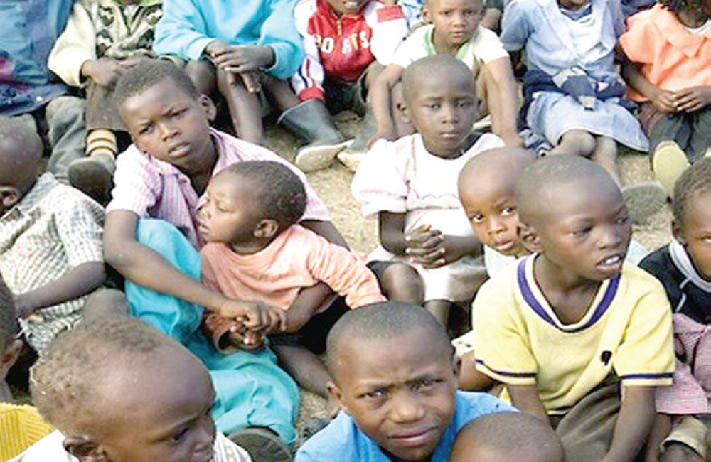
Nigeria, time for action against child mortality

The reality on the ground, as I have seen in rural Nigeria, reveals a gap between available services and actual needs that continues to impact child survival. Investing in healthcare infrastructure is crucial; facilities must be well-equipped and staffed with trained personnel to provide essential services. Expanding maternal health services and implementing incentive-based programs, such as cash transfers for attending prenatal and postnatal care, can make a substantial difference. Additionally, improving vaccination coverage, addressing malnutrition through enhanced nutrition programmes, and raising public awareness about health and hygiene practices are essential components of a comprehensive strategy. Research into barriers to healthcare access and the effectiveness of different interventions should guide policy decisions and ensure solutions are evidence-based and tailored to Nigeria’s context.

The contrast between Nigeria and other low-resource countries that have made substantial progress in reducing child mortality is both illuminating and disheartening. Nations such as Cambodia, Malawi, Mongolia, and Rwanda have achieved over a 75% reduction in under-five mortality rates since 2000.

NARD urges crowd control to reduce Mpox spread

Speaking exclusively with Healthwise, the NARD president explained that one of the major ways the disease could be transmitted was through crowds within hospitals, stressing that if someone with the disease visits the hospital, others can be at risk.

His call for crowd control at hospitals comes as the Nigeria Centre for Disease Control and Prevention announced that the country had recorded a total of 40 confirmed cases of mpox out of 830 suspected cases in the country.

Mpox has continued to spread in Africa and some parts of Europe with cases reported in several countries.

Recently, the Africa Centre for Disease Control declared a public health emergency over the growing mpox outbreak on the continent.

The outbreak has swept through several African countries, particularly the Democratic Republic of Congo.

The World Health Organisation stressed that the emergence last year and rapid spread of a new virus strain in DRC, clade 1b, which appears to be spreading mainly through sexual networks, and its detection in countries neighbouring the DRC are especially concerning, and one of the main reasons for the declaration of the PHEIC.

So far, about 2,863 confirmed mpox cases and 517 deaths across 13 African countries have been reported in 2024 alone.

Reacting to the widespread infectious disease, the NARD president suggested that hospitals should limit the number of patients and visitors, ensure proper ventilation, and enforce strict infection control protocols.

He noted that by implementing crowd control measures, hospitals can reduce the risk of transmission and help prevent the spread of the disease.

While stressing that the new strain of mpox has been discovered to be more violent than previous strains, Abdullahi called for increased awareness about the disease, improved research, and heightened alertness at border patrols to prevent the spread of the disease.

He further said, “To effectively combat Mpox, we must amplify our awareness campaigns. It’s not enough to rely on TV commercials and WhatsApp messages; we need every community and hospital to actively discuss and spread information about this disease, reaching every corner of our society.

“Reinstating the principles of infectious disease control is crucial. Encourage the public to limit contact, frequently wash hands, and consider face masks to mitigate the spread of Mpox.

“Enhanced border patrol and health screenings are essential. We must ensure rigorous checks for all incoming travelers to prevent the introduction and spread of Mpox.

“Controlling crowds, especially in hospitals, is vital to prevent the spread of mpox. Improving hospital crowd management and ongoing research will help us better understand and manage this new strain.

“With the new strain’s reservoir unidentified, controlling contact with potential sources of contamination is key. Educate people on how to avoid buying contaminated meat to reduce risk.”

The NARD president added, “Raising awareness about Mpox’s early symptoms is critical. Prompt identification and medical attention can prevent further spread, so people must seek screening as soon as symptoms appear.

“Increasing awareness about mpox vaccination is vital. Publicising vaccination options and benefits can help control the spread and protect more individuals from the disease.”

Mpox is a rare viral zoonotic infectious disease (i.e., disease of animals transmitted from animals to humans) that is endemic in several African countries including the tropical rainforests of Central and West Africa.


RSS
Follow by Email
YouTube
LinkedIn
Share
Instagram
Telegram
WhatsApp
Tiktok